
Past installment · NeuroDataReHack
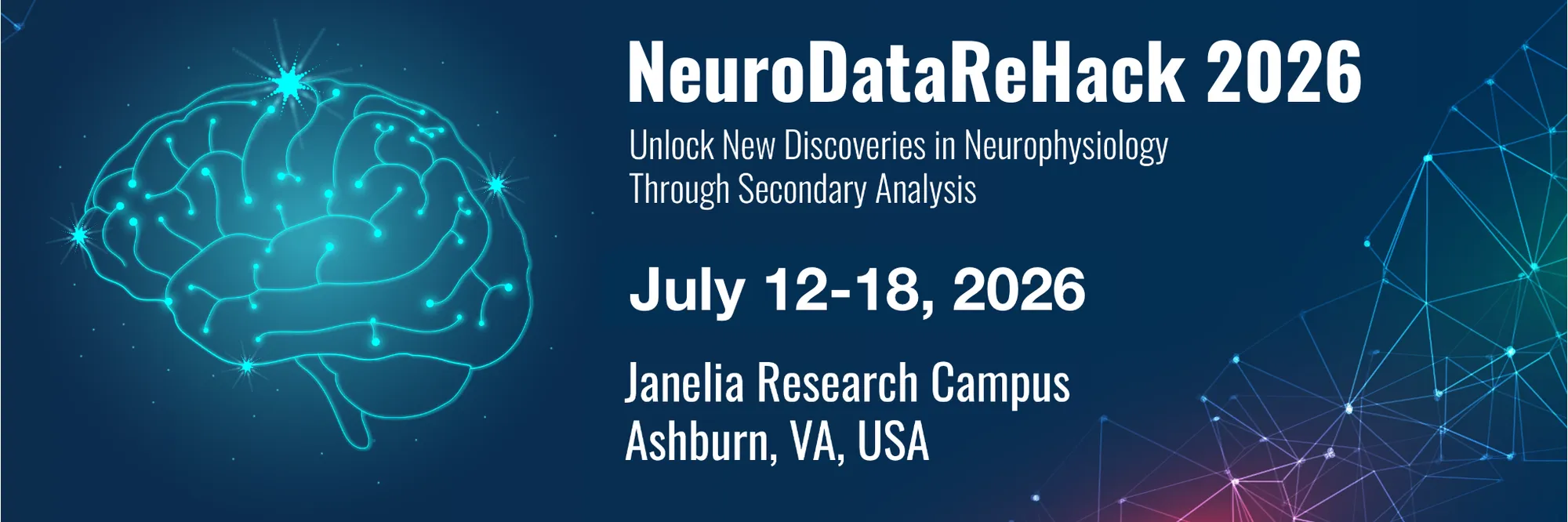
NeuroDataReHack 2026
Unlock new discoveries in neurophysiology through secondary analysis.
- Dates
- July 12–17, 2026 · arrive Saturday, July 11
- Venue
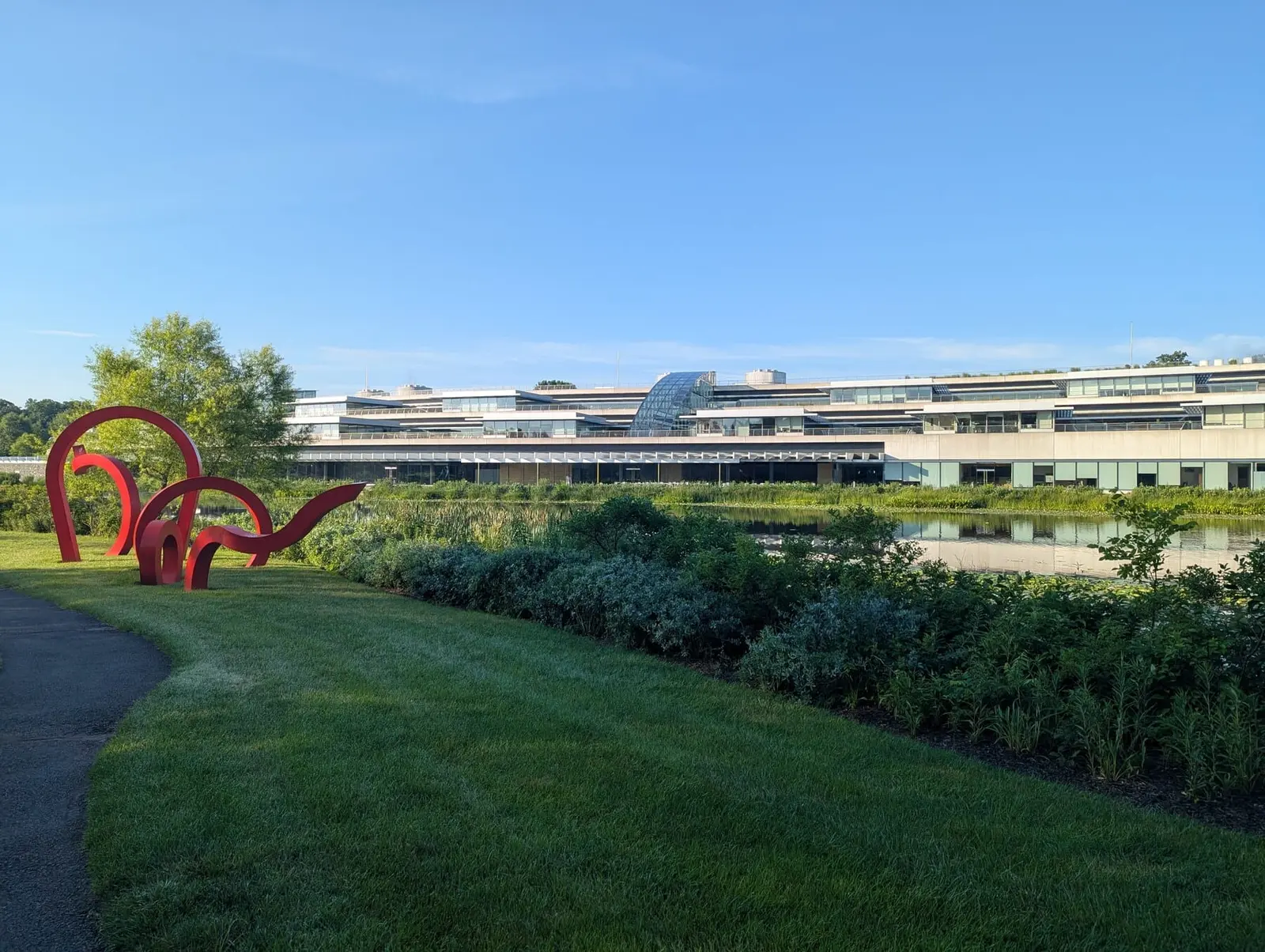
- HHMI's Janelia Research Campus, Ashburn, Virginia, United States · Map
- Organizers
- Ben Dichter, Ryan Ly, Oliver Rübel
24
participants
18
institutions
7
countries
20
projects
17
recordings
4.86/5
overall rating
n = 22
About this year
NeuroDataReHack 2026 was the fifth installment and the third at HHMI-Janelia. Following feedback from 2025, where many participants found five days slightly too short, the workshop was extended to six days. The change was well received.
The most significant programmatic change in 2026 was dedicated instruction on coding with large language models and AI agents: a lecture on developing with LLMs and two breakout sessions on getting started with AI agents and on agent skills. This material was among the best received content of the workshop and changed how participants worked on their projects. It also generated the clearest request for the future: more tutorials on using agentic AI effectively, delivered earlier in the week.
Participants reported on 20 projects. Several were replication or generalization studies, testing whether a published finding holds in datasets other than the one it was reported in, and three contributed directly to the open data infrastructure instead of only consuming it: S3 streaming support in the AqNWB C++ API, a validated import pipeline bringing DANDI datasets into BrainSTEM, and a feature-calculator module for benchmarking a brain-region classifier across archives.
Datasets used
Participants concentrated on a small number of large, well-documented datasets. The International Brain Laboratory Brain Wide Map (DANDI:000409) was used by more respondents than any other, followed by the Allen Brain Observatory Visual Coding Neuropixels releases (DANDI:000021 and 000022), the OpenScope PsyCode psilocybin dataset (DANDI:001417), and the OpenScope Community Predictive Processing dataset (DANDI:001637).
Instructors


Lawrence Berkeley National Laboratory

Lawrence Berkeley National Laboratory

Allen Institute for Neural Dynamics

Flatiron Institute

HHMI's Janelia Research Campus

Flatiron Institute

Allen Institute for Neural Dynamics

HHMI's Janelia Research Campus

Allen Institute for Neural Dynamics

International Brain Laboratory

HHMI's Janelia Research Campus

HHMI's Janelia Research Campus
HHMI's Janelia Research Campus

University of Pennsylvania

EPFL

Harvard University
Schedule
Some talks were given remotely and the room recording did not capture the presenter's slides; those are marked in the schedule and will be added where a recording can be recovered.
Day 0Saturday, July 11Arrival
| Time | Session | Speaker |
|---|---|---|
| 7:00 PM – 8:30 PM | Arrival and dinner |
Day 1Sunday, July 12Accessing data and starting projects
| Time | Session | Speaker |
|---|---|---|
| 8:15 AM – 9:00 AM | Breakfast | |
| 9:00 AM – 9:30 AM | Welcome to NeuroDataReHack 2026 | Ben DichterCatalystNeuro |
| 9:30 AM – 10:30 AM | Introduction to NWB and DANDI | Ryan LyLawrence Berkeley National Laboratory |
| 10:30 AM – 11:30 AM | How to read NWB files (including streaming) | Oliver RübelLawrence Berkeley National Laboratory |
| 11:30 AM – 12:30 PM | A tour of NWB Dandisets and searching tools | Ben DichterCatalystNeuro |
| 12:30 PM – 1:30 PM | Lunch | |
| 1:30 PM – 2:15 PM | Data from the International Brain Laboratory | Pranav RaiInternational Brain Laboratory |
| 2:15 PM – 3:00 PM | OpenScope Predictive Processing and the Global Brain Observatory (not recorded) (remote) | Jérôme LecoqAllen Institute for Neural Dynamics |
| 3:00 PM – 3:20 PM | Introduction to OpenScope data and the DataBook | Carter PeeneAllen Institute for Neural Dynamics |
| 3:20 PM – 4:50 PM | Project roundtable | Ryan LyLawrence Berkeley National Laboratory |
| 4:50 PM – 5:30 PM | Hacking on projects | |
| 5:30 PM – 6:30 PM | Speed networking | Ben DichterCatalystNeuro |
| 6:30 PM – 7:30 PM | Dinner |
Day 2Monday, July 13Analyzing data
| Time | Session | Speaker |
|---|---|---|
| 8:15 AM – 9:00 AM | Breakfast | |
| 9:00 AM – 9:15 AM | Introduction to Day 2 | Ben DichterCatalystNeuro |
| 9:15 AM – 9:45 AM | OpenScope DataBook (electrophysiology) | Carter PeeneAllen Institute for Neural Dynamics |
| 9:45 AM – 10:15 AM | How to write good issues | Ben DichterCatalystNeuro |
| 10:30 AM – 11:00 AM | Reuse showcase: Neural population geometry and optimal coding of tasks with shared latent structure (not recorded) (remote) | Will SlattonHarvard University |
| 11:00 AM – 12:00 PM | Hacking on projects | |
| 12:00 PM – 12:30 PM | OpenScope DataBook (calcium imaging) (not recorded) | Carter PeeneAllen Institute for Neural Dynamics |
| 12:30 PM – 1:30 PM | Lunch | |
| 1:30 PM – 3:15 PM | Neural Data Analysis with Pynapple | Guillaume ViejoFlatiron Institute |
| 3:15 PM – 5:15 PM | Hacking on projects | |
| 5:15 PM – 6:00 PM | Dandiset showcase: Glia Accumulate Evidence that Actions Are Futile and Suppress Unsuccessful Behavior | Misha AhrensHHMI's Janelia Research Campus |
| 6:00 PM – 6:30 PM | Hacking on projects | |
| 6:30 PM – 7:30 PM | Dinner |
Day 3Tuesday, July 14Advanced analysis
| Time | Session | Speaker |
|---|---|---|
| 8:15 AM – 9:00 AM | Breakfast | |
| 9:00 AM – 9:10 AM | Introduction to Day 3 | Ben DichterCatalystNeuro |
| 9:10 AM – 9:25 AM | Project check-ins | |
| 9:25 AM – 10:25 AM | Developing with LLMs | Ben DichterCatalystNeuro |
| 10:55 AM – 12:00 PM | Applying Neural Foundation Models (torch_brain) | Alexandre AndreUniversity of Pennsylvania |
| 12:30 PM – 1:30 PM | Lunch | |
| 1:30 PM – 2:10 PM | Virtual datasets and LINDI (not recorded) | Ryan LyLawrence Berkeley National Laboratory |
| 2:10 PM – 6:30 PM | Hacking on projects | |
| 6:30 PM – 7:30 PM | Dinner |
Day 4Wednesday, July 15Hacking on projects
| Time | Session | Speaker |
|---|---|---|
| 8:15 AM – 9:00 AM | Breakfast | |
| 9:00 AM – 9:10 AM | Introduction to Day 4 | Ben DichterCatalystNeuro |
| 9:10 AM – 9:30 AM | Project check-ins | |
| 9:30 AM – 10:15 AM | Converting data to NWB (not recorded) | Ryan LyLawrence Berkeley National Laboratory |
| 10:15 AM – 11:00 AM | Neurosift and AI for analysis (not recorded) (remote) | Jeremy MaglandFlatiron Institute |
| 11:00 AM | NWB analysis pipelines with CICADA (not recorded) (remote) | Robin DardEcole Polytechnique Federale de Lausanne |
| 11:30 AM – 12:30 PM | Hacking on projects | |
| 12:30 PM – 1:30 PM | Lunch | |
| 1:30 PM – 2:10 PM | Lab tour (not recorded) | Jakob VoigtsHHMI's Janelia Research Campus |
| 2:10 PM – 3:00 PM | Hacking on projects | |
| 3:00 PM | Getting started with AI agents | Ben DichterCatalystNeuro |
| 4:00 PM | Agent skills | Ben DichterCatalystNeuro |
| 5:00 PM – 6:30 PM | Hacking on projects | |
| 6:30 PM – 7:30 PM | Dinner |
Day 5Thursday, July 16Data processing
| Time | Session | Speaker |
|---|---|---|
| 8:15 AM – 9:00 AM | Breakfast | |
| 9:00 AM – 9:10 AM | Introduction to Day 5 | Ben DichterCatalystNeuro |
| 9:10 AM – 9:40 AM | Visual computations in large-scale recordings | Carsen StringerHHMI's Janelia Research Campus |
| 9:40 AM | Facemap: quantifying orofacial behavior | Atika SyedaHHMI's Janelia Research Campus |
| 10:10 AM – 10:40 AM | Spike sorting with Kilosort | Jacob PenningtonHHMI's Janelia Research Campus |
| 10:40 AM – 11:25 AM | SpikeInterface (not recorded) (remote) | Alessio BuccinoAllen Institute for Neural Dynamics |
| 11:25 AM – 12:30 PM | Hacking on projects | |
| 12:30 PM – 1:30 PM | Lunch | |
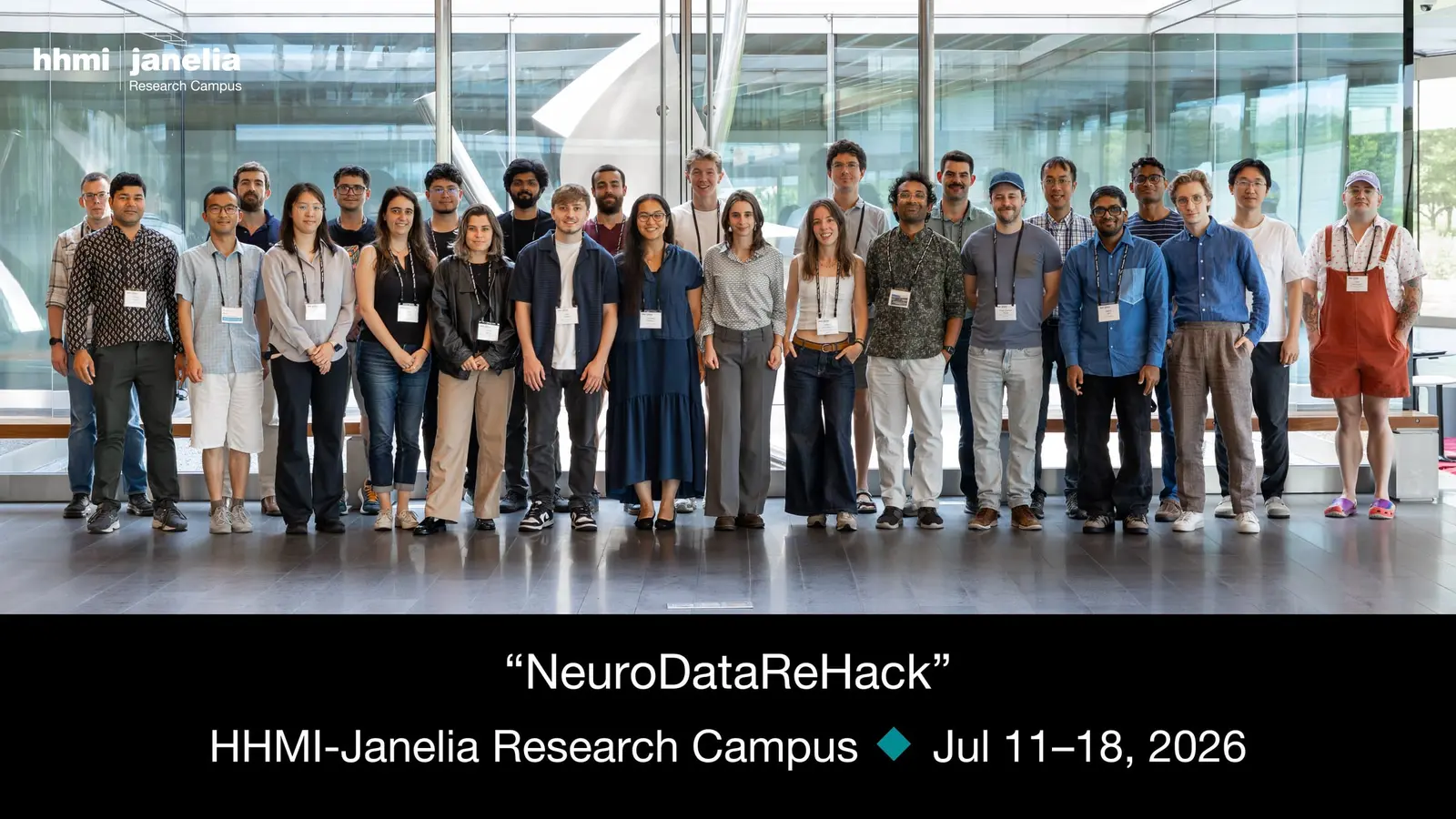
| 1:30 PM – 1:45 PM | Group photo | |
| 1:45 PM – 6:30 PM | Hacking on projects | |
| 6:30 PM – 7:30 PM | Dinner |
Day 6Friday, July 17Presentations
| Time | Session | Speaker |
|---|---|---|
| 8:15 AM – 9:00 AM | Breakfast | |
| 9:00 AM – 9:10 AM | Introduction to Day 6 | Ben DichterCatalystNeuro |
| 9:10 AM – 12:15 PM | Hacking on projects | |
| 12:15 PM – 12:30 PM | Project presentations | |
| 12:30 PM – 1:30 PM | Lunch | |
| 1:30 PM – 3:15 PM | Project presentations | |
| 3:15 PM – 5:00 PM | Project presentations | |
| 5:00 PM – 6:30 PM | Discussion and feedback | |
| 6:30 PM – 7:30 PM | Dinner |
Recordings

Introduction to NWB and DANDI
NWBDANDI

How to read NWB files (including streaming)
NWBStreaming


Data from the International Brain Laboratory
IBLElectrophysiology


OpenScope DataBook (electrophysiology)
OpenScopeElectrophysiology

How to write good issues
Open source


Applying Neural Foundation Models (torch_brain)
Foundation models

Getting started with AI agents
AI agentsLLMs

Agent skills
AI agentsLLMs

Visual computations in large-scale recordings
Dataset showcaseCalcium imaging


Spike sorting with Kilosort
Spike sortingElectrophysiology
Projects
Participants documented their projects in a shared document during the week; the write-ups below are drawn from it.
Oscillatory signatures of prediction error in mouse V1: stimulus-dependent, not error-general
José Antonio Velázquez Ruiz
Prior work on the OpenScope Global/Local Oddball dataset reported a gamma-band (~30-90 Hz) power increase in V1 during prediction-error trials, interpreted as a general oscillatory signature of sensory prediction error.
Replicating minute-scale oscillatory sequences in entorhinal cortex
Ben Dichter, Ryan Ly
Gonzalo Cogno et al. (2024) reported that mouse medial entorhinal cortex (MEC) activity can organize into ultraslow oscillations, with periods of tens of seconds to minutes, and that during those oscillations the cells…
Support S3 read in the AqNWB C++ API
Oliver Rübel, Ben Dichter
The goal of the project is to support data streaming from NWB files in S3 via the AqNWB C++ API using the HDF5 ROS3 driver.
Benchmarking the ephys-atlas brain-region classifier on Allen (AIND) Neuropixels data
Pranav Rai
The goal of the project was to develop a FeatureCalculator module for NWB datasets, and use that to test how a region classification model built on IBL data transfers to the AIND Neuropixels 1 dataset.
Brain-wide neural attractor dynamics of decision-making
Estrella Villanueva Pivel, Siyu Wang
Previous evidence hints at attractor dynamics underlying decision-making processes.
DANDI Integration in BrainSTEM
Juan Castano
The goal of this project is to import hundreds of published DANDI dandisets into BrainSTEM, extract metadata from NWB files with contextual information and capture missing values from the associated source paper.
Disruption of Visual representations and Brain-Wide neural dynamics following psilocybin administration(Openscope)
Nilesh Jain, Pankaj Gupta
Psychedelics are known to alter perception, sensory integration, and cortical network dynamics, yet the mechanisms by which they reshape visual representations across distributed cortical populations remain poorly…
Does the pupil index the state of visual cortex?
Emmanuel González González, Rebeca Santé Arsenal
We propose a high-performance machine learning framework to decode and predict primary visual cortex (VISp) latent population states using solely the temporal dynamics of the pupil.
Exploring hidden state dynamics in decision making
Dinesh Natesan, Teo Fantacci
The aim of the project is to explore the effectiveness of Hidden Markov Models in describing the neural dynamics.
000620, 000409Read more
Flow-ID
Alice Wang
Aligning calcium recordings across individuals remains challenging to neuron or cell type level.
000715, 000714, 000541, 000565, 000692, 000776Read more
Geometric analysis of behaviorally derived neural latent state dynamics in IBL BWM data
Ariana Tortolani, Camila Maura
Recent work has established that decision-related signals are distributed across the brain, spanning sensory, association, and motor cortices (International Brain Laboratory et al., 2025).
Hippocampal - Prefrontal Manifold Geometry Across Novelty and Learning
Mikhail (Misha) Proskurin
Population-geometry ("cognitive map") analysis of hippocampal CA1 and prefrontal (PFC) ensemble recordings from the Jadhav lab, using manifold and dimensionality-reduction methods.
Hippocampal events under psilocybin
Kathleen Esfahany
Dentate spikes (DS) are hippocampal population events important for memory encoding.
Neural representations of block structure in mouse models of autism
Jake Pennington, Nicole G.-Rangel
Many disparate genetic variations are associated with autistic traits in both humans and mouse models, which complicates the study of genetic and neurophysiological bases for autism.
Pooling neurons masks heterogeneous low-dimensional geometries during temporal processing in DMFC
Juan Pablo Marquez Gutierrez
This project examines whether neurons recorded within the same macaque brain region form functionally distinct subpopulations with heterogeneous population dynamics during behavior.
000130Read more
Psilocybin influence on mice behavior and brain state
Yuxin Pan
Psilocybin is a naturally occurring psychedelic compound found in over 200 species of mushrooms, often called “magic mushrooms.” In the body, psilocybin is rapidly converted into psilocin, which is the active molecule…
001417Read more
Saliency Modulation of V1 Visual Encoding during Natural Image Viewing
Kyle Jenks
Visual saliency is thought to influence how sensory information is prioritized in higher-order cortical areas in primates, but its unique contribution beyond low-level image features remains unclear in mouse V1.
Toward Non-Invasive Depth Recording: Learning Mesial Temporal iEEG from Scalp EEG
Yinuo Qin
This project develops a transformer model that generates intracranial EEG from non-invasive scalp EEG.
Visual hierarchy - onset latencies, representational geometries, communication
Aravind Krishna
This project investigates the spatiotemporal processing and representational geometry of the mouse visual system by leveraging the Allen Institute Visual Coding Neuropixels dataset.
Working memory representations in macaque frontal cortex
Will Reith
Working memory (WM) allows animals to store recent information for imminent use, yet the nature of WM representations in prefrontal cortex (PFC) remains debated.
000620Read more
Photos
Participants said
“I didn't know it was so easy to get started with analysing open datasets!”
“Why wait for the experiments? Use open data now!”
“Getting familiarized with open data is a critical skill for anyone who wants to think through their hypothesis before diving deep into an experimental project, or who needs to replicate results on new data. This workshop is a fantastic way to understand what data is already out there, how to use open science tools, and how to contribute yourself to the open data community.”
“Collective data collection, data sharing and data reuse will be the future of neuroscience. This workshop is great for computational neuroscientists, and experimentalists who could benefit from using open data to complement their own research.”
Hosted and supported by